
The system
Separate money for separate conversations.
Candy money cannot buy screen time. Because each budget stands alone, a kid learns one decision at a time instead of arguing about all of them at once.
Candy Cash
Teaches moderation
Sweets, soda, the checkout-aisle asks. Once a kid is paying for the second cookie out of a budget they can see, they start turning it down on their own.
Bills run $1 to $20. Most families price a treat at $1 or $2.

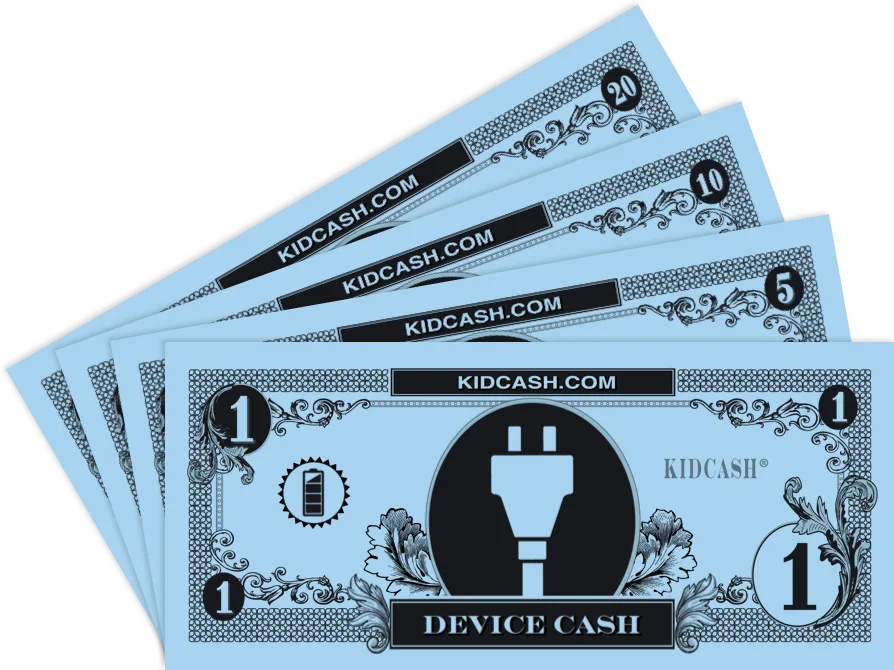
Device Cash
Teaches self-regulation
Screens, TV, games and tablets. This is where most families start, because it turns the daily fight into a number the kid is holding.
Price it in minutes: $1 for fifteen minutes is a common starting point.
Activity Cash
Teaches patience
Outings, sports, the trampoline park, family fun. The good stuff costs more, so kids learn to hold out for the thing they actually want.
Bills run $1 to $100, so a big day out is worth saving toward.

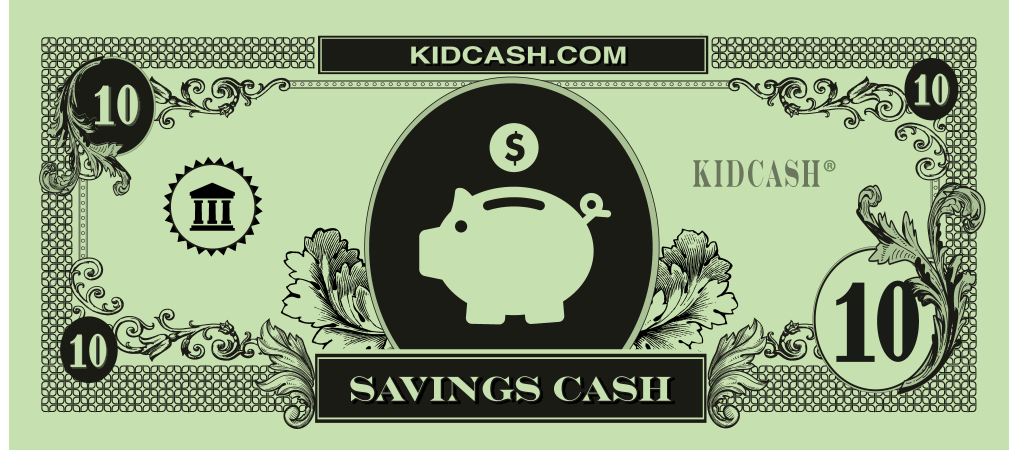
Savings Cash
Teaches money sense
The one that spends like real money. It goes in the bank book, it adds up week over week, and a goal they picked themselves is what keeps it there.
Pair it with the bank book so they can watch the balance grow.
Gift Cash
Teaches generosity
Worth double, and only spendable on somebody else. Giving becomes the smart move rather than the lecture, and kids notice that.
Good for birthdays, siblings, and the grandparent who has everything.

And three tools for what money alone cannot do.
Bonuses for the hard goals, tickets for the hard talks, bank books for the long game.
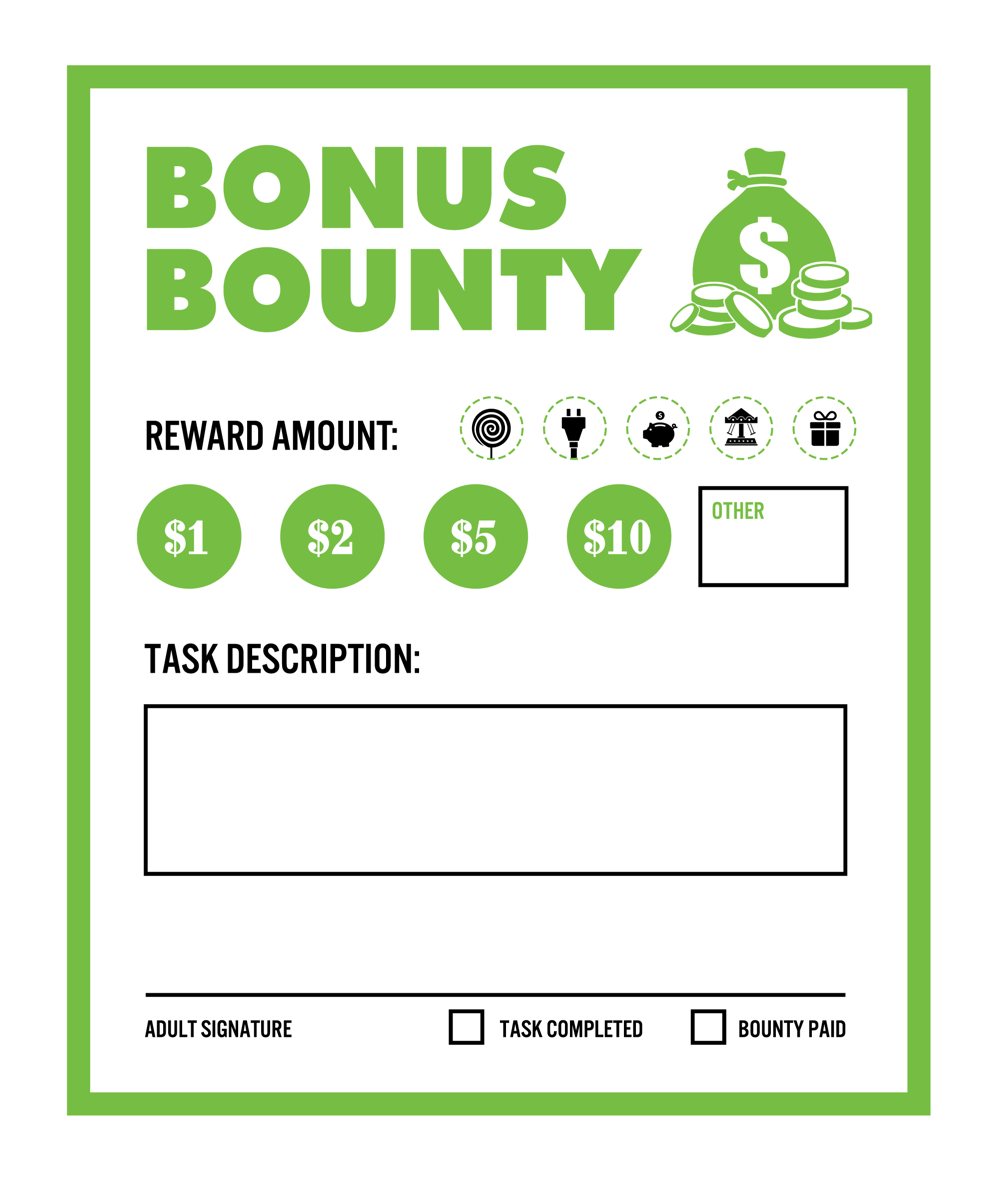
Bonus Bounty
Up for grabs
Post a bounty on the thing nobody wants to do, and let them decide it is worth it. Makes the mentally tough goals achievable.
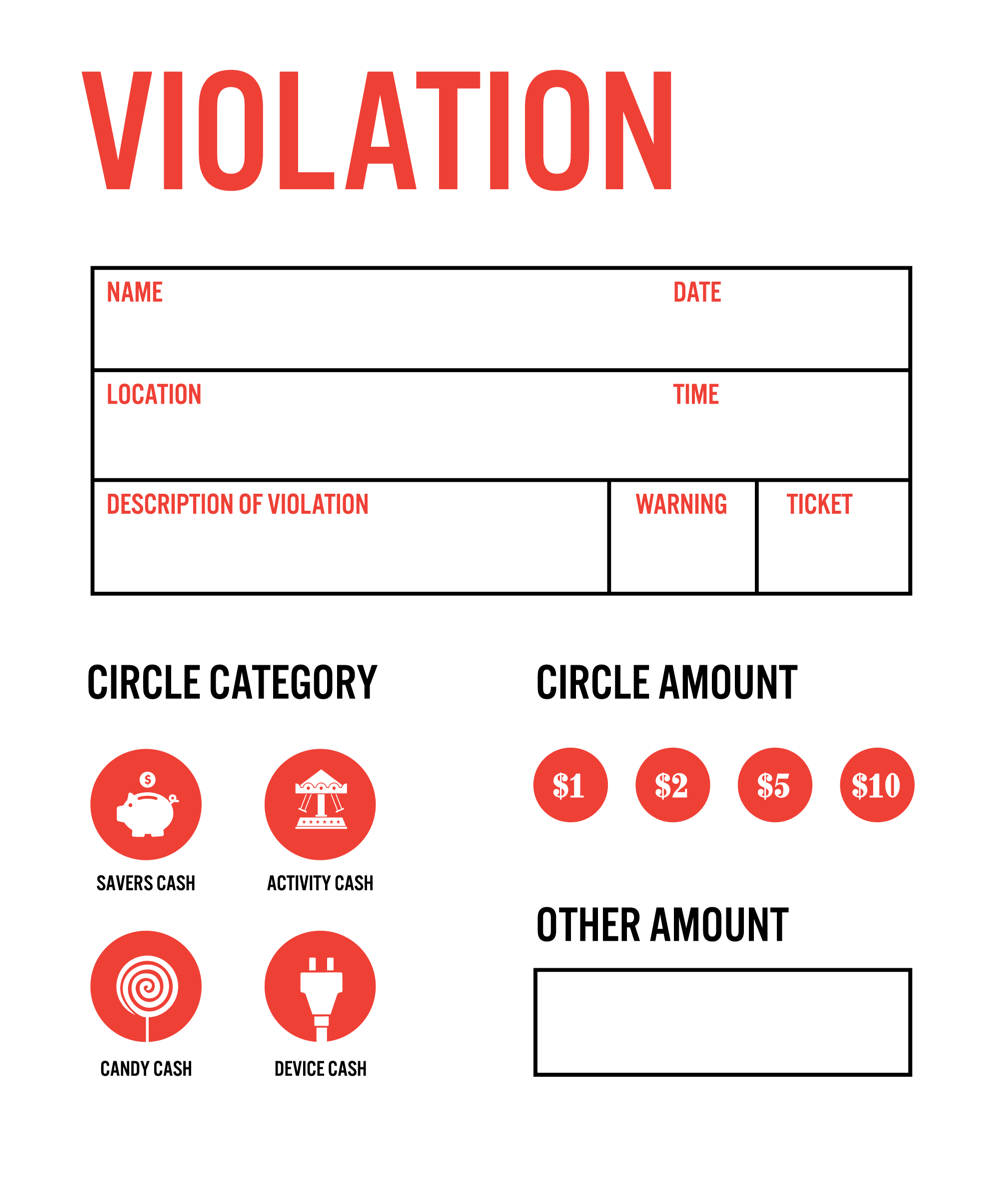
Violation tickets
For the hard talks
Write it, hand it over, move on. The correction lands at Payday instead of in the middle of the moment.
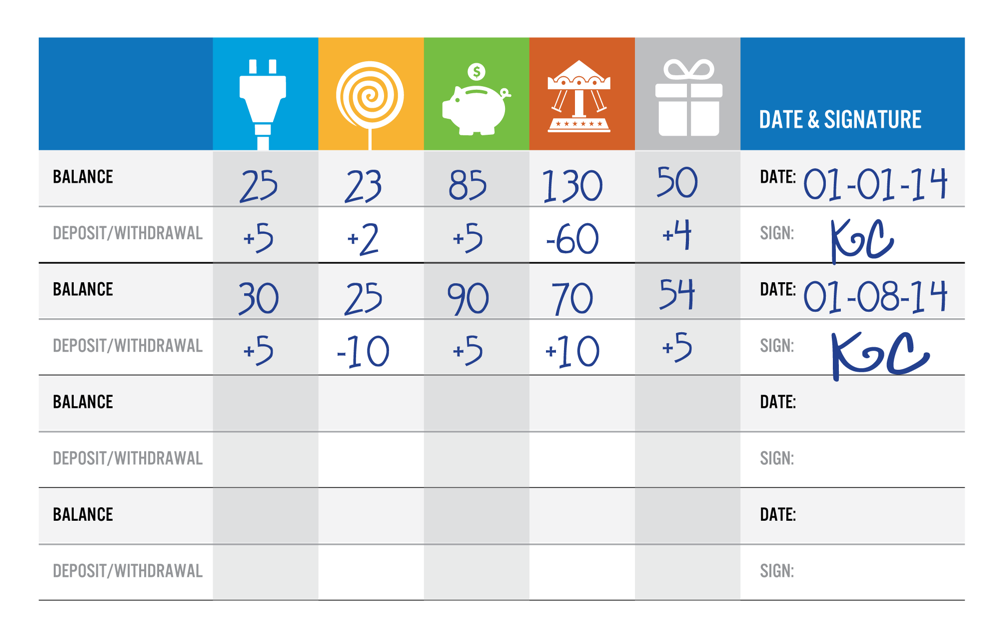
Bank Books
Teaches finance basics
Deposits, withdrawals, a running balance in their own handwriting. Money kept safe, and saving made visible.
Pick one currency and start there.
You do not have to run all five. The screens budget alone changes most weeks.